

The Totally Legit Guide On How To Play DnD Tomorrow
And why you really shouldn’t
Editor’s Note: This is our first Totally Legit Backlog & Nonsense post from one of our at-large contributors, Jack Haldane. While not a video game, DnD is still a game. Deal with it. -Cervando
So you want to Dungeon dem Dragons…
Critical Role, Stranger Things, the Wiry-Hot-Topic-Mall-Swords-Guy and/or Tattoo-Laden-Jackbooted-Goth-Mommy you don’t have the courage to chat up on the bus. DnD is a bigger part of the cultural zeitgeist than ever thanks to these influences, and now you’re dungeon curious but don’t know where to start.
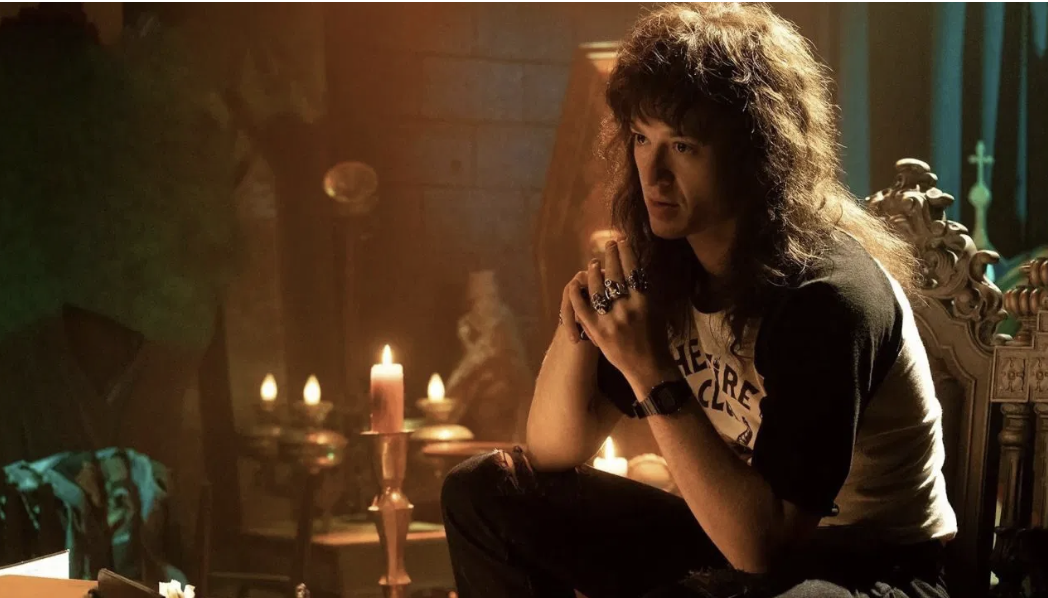
Master Me, Dungeon Daddy…
You’ve never played an honest-to-Gods session of DnD, felt the thrill of chucking a nacho cheese dusted math rock across a table and cheering gleefully with your local band of misfits. The truth is that you can start tomorrow. You don’t need gear or equipment, you don’t need to spend money, and in an era when you can type “roll 2d12” into google, you don’t even really need dice. I am far from the first to tell you this, and I won’t rip off Matty C, titan of the community, for cheap internet clicks. If I might distill his thesis;
“Once you build it, they will come. And it’s easier to build than you’d imagine.”

Matt Colville, I count you among my heroes and have tremendous respect for your work. I apologize for making a crude suggestion to garner approval from internet strangers. If you are to put anything in your anus, today or any other day, I sincerely hope you do so with plenty of lubricant and enthusiastic consent
Matt Colville, ‘play tomorrow’ evangelist
I am going to, respectfully, suggest that Mr. Colville shoves this lauded advice up his arse. You SHOULD NOT play DnD tomorrow. Your first board game was probably Candyland, your first video game was probably Mario something, and your first tabletop role-playing game (TTRPG) really shouldn’t be the one with a 350+ page rulebook. This is to say nothing of battlemaps, minis, dice, campaigns themselves… While playing DnD can be easier and faster to prep than you might think, there’s no escaping the sheer size of the thing. It’s an investment, it’s daunting, and if you’ve never played before, you don’t even know if you’d have fun with it.
In addition to these points, the reason you haven’t played probably fits into one of the following categories:
I don’t have a DM
I don’t know the rules
I can’t afford all the books and accessories
I don’t know if I can convince my friends to play
I’m bad at math
I promise that the rest of this unhinged rant is actually a game review of systems that directly addresses these common problems (don’t hurt me, TLGR team, I don’t want the hose again).
It puts the reviews on its skin, otherwise it gets the hose again!
So be the solution! Be the DM, play a game that is dead-simple to pick up and learn for everyone, players included, and use systems that ask for an investment of $0-40!
A review/pitch for two one-page TTRPGs you should actually play tomorrow
“As you attempt to ‘purple nurple’ the corpse, the leathery and desiccated flesh rips, leaving you with a handy souvenir.”
-Our GM in an actual game of Everyone is John
DnD is often described simply as: The DM explains the scenario, you tell them what you want to do, and then your success or failure is resolved by the dice. It isn’t actually that simple, but what if it could be? No long rulebooks, no complex character sheets. Even as someone who loves chunky rulebooks and long character sheets, I can appreciate the appeal of a more straightforward game, especially if you’re new to the arena.
Honey Heist and Everyone is John have a few things in common. They are both one-page one-shot RPGs. You can easily find both rulesets for free, and you only need a set of standard 6-sided dice. No maps, no character sheets. Both encourage you to lean into a goofy, absurd premise and have fun making up stupid bullshit with your friends. Critically, buy-in is low for everyone. Players can make their characters in about ten minutes and understand the rules pretty much right away. The GM can actually prepare a session in 30-60 minutes without any prior experience. The game itself will take around 30-90 minutes depending on six billion variables.
In Everyone is John, the GM plays the titular John, a man who hears voices. Each of the players is a voice with a goal they’re fixated on, and their only objective is to get John to do this thing for points. Making a character is as easy as choosing a goal and two “strengths” that the voice imbues John with. GMing is as easy as pulling up a town/amusement park on google maps and going for it. Although you wouldn’t necessarily know it from reading the rules, EiJ is totally setting-agnostic; if you ignore the “lives in Minneapolis” line then there’s no reason John couldn’t be on a spaceship, in a medieval castle, or on the Vegas Strip.
In Honey Heist, you’re part of a crack team of criminal operatives looking to score… Honey. And you’re bears. The setup, as written, is pretty much entirely based on rolling dice tables- both for players and for the GM. This is fantastic if you (or your players) have some choice paralysis when faced with the old “you can do anything” chestnut. This means you can spend ten minutes rolling dice before the game, take some hasty notes, and finally gather your players to roll some characters up. If you or your players are a little more adventurous, feel free to use the tables as a set of options and go fully custom. As with EiJ, the rules are dead simple and resolution is based on rolling a d6. Unlike EiJ, HH is not competitive and doesn’t hand out points- more in line with most classic TTRPGs.
More expansive TTRPGs you can actually play next week
“You chuck yet another dildo into the abyss, the wind slams it into the Eastern wall of the chamber.”
-Yours truly, as my players attempt to solve a puzzle using silicone dicks*
*Author’s footnote: The puzzle, as originally conceived, was not dildo-based.
You want backstories, rolling a wider spectrum of polyhedra, and a rulebook you could kill a (smallish) spider with? There are tons of TTRPG systems that are lighter weight and more beginner friendly, I’ll highlight here the Kids on Bikes/Teens in Space/Kids on Brooms (KoB) family. Each of these games are from the same studio and use similar mechanics, with some tweaks to capture a particular genre/fantasy where children do crimes. Character sheets are quite simple, with skill specialization mostly captured by each skill using a different die rather than a complex array of stats and modifiers. A brawny, stupid character, for example, rolls a d4 on any task that requires cleverness and a d20 on any task that requires strength. This family gets us one step closer to the way DnD works with resolution/outcomes; After players explain what they’d like to do, the GM will declare, using their best judgment, the difficulty class (DC) of the action the player wants to perform. If the player rolls at or above that value, they succeed.

I recently GM’d a game of KoB with a highly experienced TTRPG player, a player who had played some ultralights like Everyone is John, and a completely new player with zero TTRPG experience.
Character creation is quick and easy; The mechanics are simple, and each player wrote a ~3 sentence backstory. I probably spent 3 hours doing real “prep” and a fair amount of daydream-worldbuilding while I pretended to work at my desk job. I wish I had done <2 hours of prep, because my 12-room dungeon became a 2-room dungeon after two hours of my players harassing faculty, bribing people, and committing various crimes (and did I mention the wild use of dildos to solve a puzzle?). Did I set indisputable and perfectly logical DCs that would hold up to intense scrutiny? No! Did I forget the names of important NPCs? Yes! Ultimately, though, GMing was a breeze, and I think the players had a ton of fun. We could also play for only the ~$30 cost of the PDFs from the vendor. No maps, no minis, nothing fancy. (You might want to buy a set of standard TTRPG dice).
TL;DR
This was (technically) a game review, but moreso a reminder that, just as Monopoly isn’t the only or best board game for all groups, DnD isn’t the only or best TTRPG for all groups. (Minor difference: DnD is genuinely a fucking blast, and Monopoly sucks balls because it was designed to be frustrating and shitty as a form of political commentary). You should play TTRPGs if DnD sounds cool to you, but you shouldn’t play DnD tomorrow. There’s a huge constellation of TTRPGs out there to explore, and I’d argue that all the candidates reviewed here are a better “start tomorrow” candidate. Use these to marshall your troops and get a little experience under your belt, then watch Matty C’s “running the game series” and start playing DnD… Sometime next month. Assuming you and the homies can sync your calendars. (Good luck with that.)

+2 to initiative
But minus lots of time in your life.
Jack Haldane is a friend of TLGR and way too smart to be stooping down to our nonsense. He likes to craft intricate games and puzzles that we immediately derail. When he’s not being an actual productive member of society he’s either ranting about dinosaurs, chickens, or some other nerd nonsense. He’s Totally Legit.
